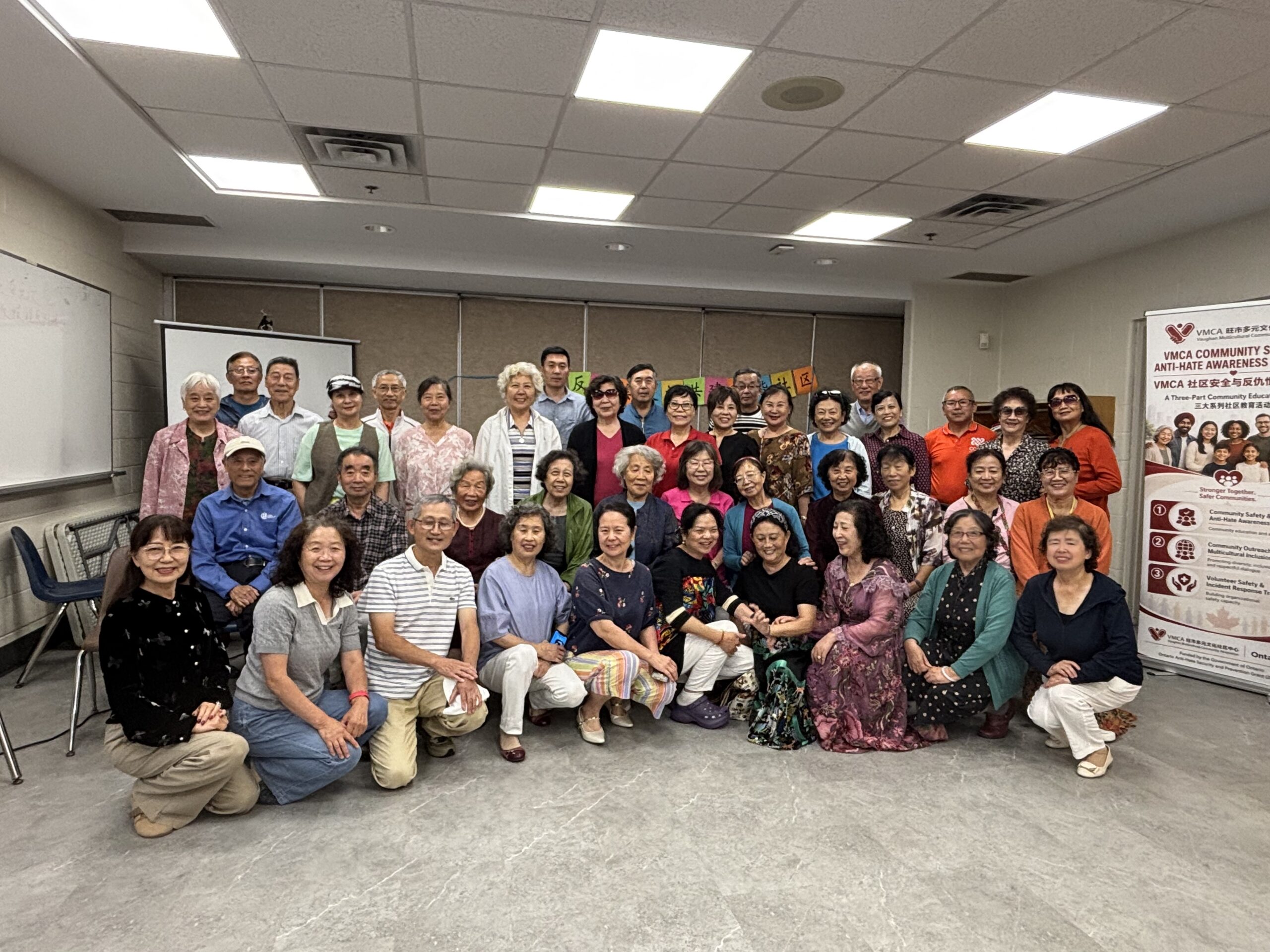
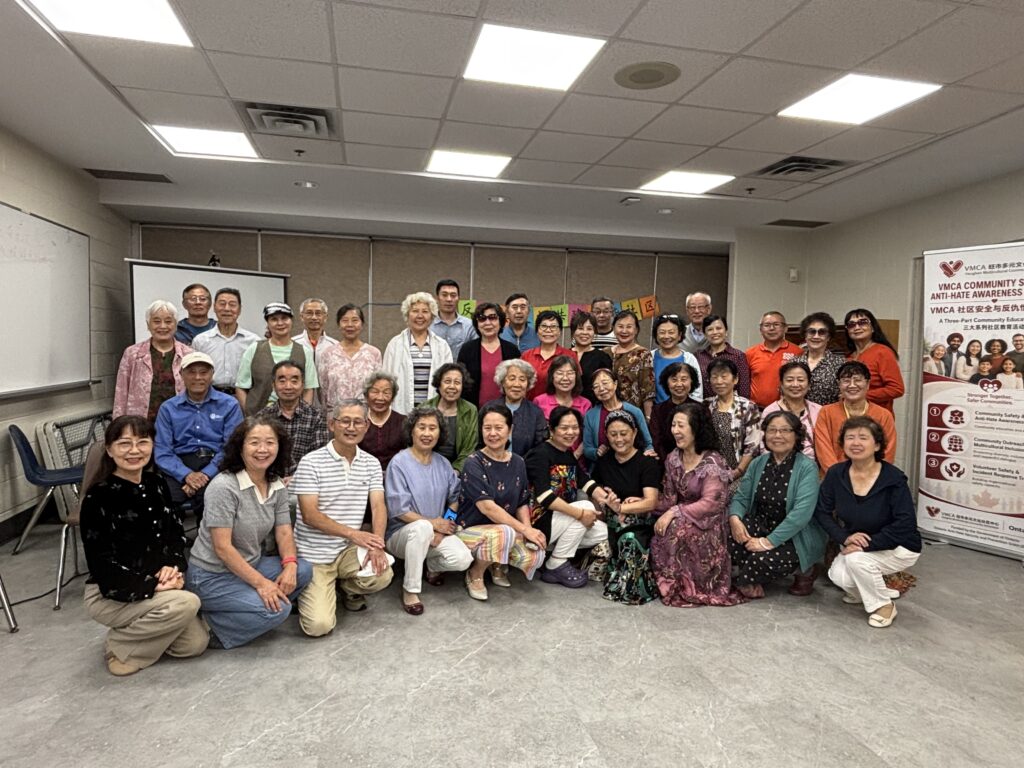
Vaughan Multicultural Community Association (VMCA) held the second session of its Community Outreach & Multicultural Safety Awareness series on the evening of July 20 at Rouge Woods Community Centre.
Titled Stand Against Racial Discrimination, Build a Harmonious Community, the session featured guest speaker Mr. Ruida Tian, who discussed multiculturalism in Canada, racial discrimination, hate-motivated incidents, legal protections and the practical steps residents can take when facing discrimination.
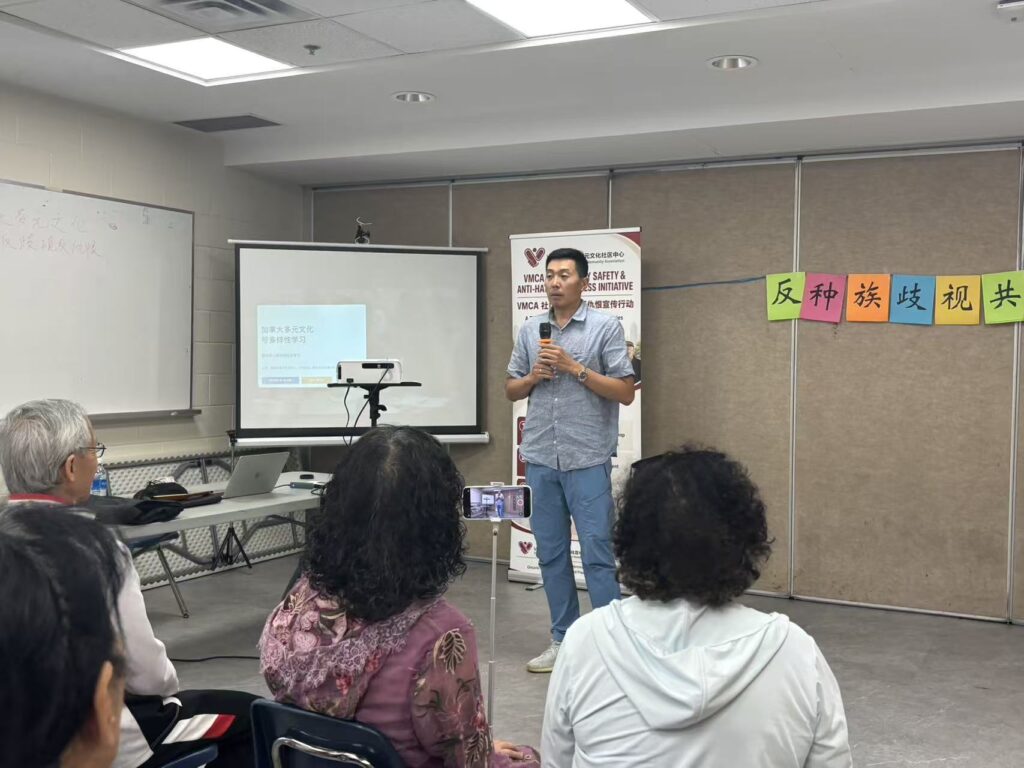
The event was attended by senior members of the community. In addition to providing practical information, the session created an opportunity for participants to share personal experiences and discuss the challenges that some immigrants and racialized residents may encounter while settling and living in Canada.
Turning an Abstract Issue into Personal Stories
During his approximately 45-minute presentation, Tian drew on his own experiences with racial discrimination. By connecting the broader issue of anti-discrimination to events from his personal life, he helped make the subject more immediate and relatable for the seniors in attendance.
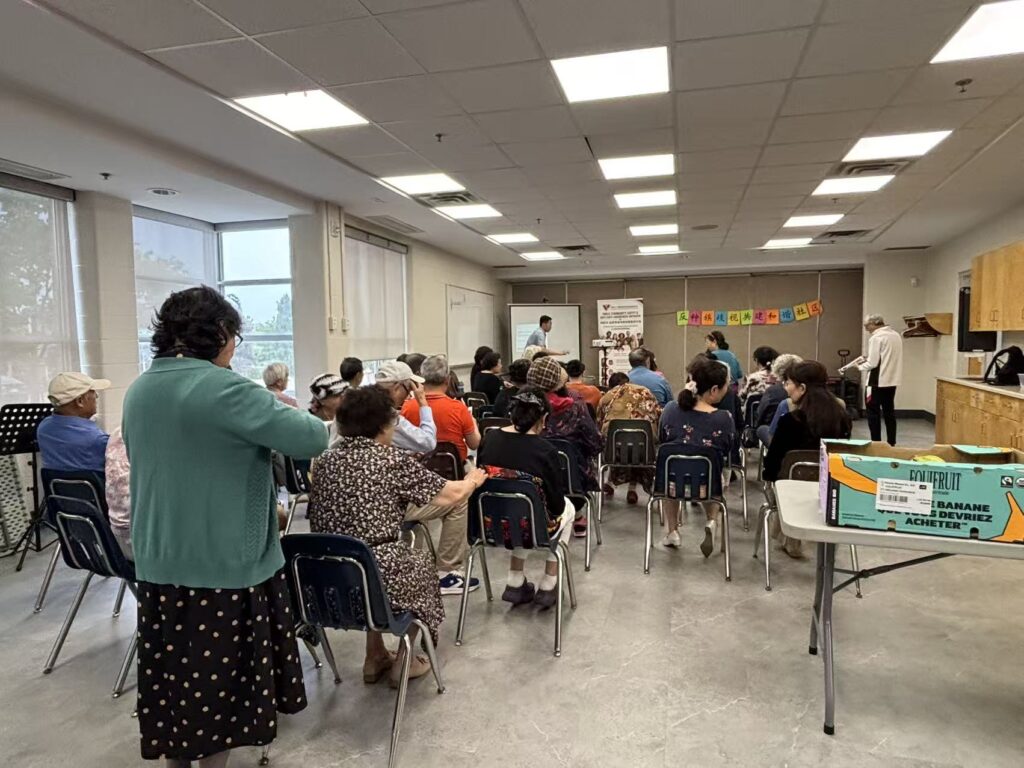
Tian explained that Canada is a multicultural society made up of residents from diverse racial, ethnic, linguistic, cultural and religious backgrounds. Multiculturalism, he said, is reflected not only in the country’s population and cultural activities, but also in whether individuals receive equal treatment, can maintain their cultural identities and have access to appropriate protection when their rights are affected.
He noted that living in a multicultural society does not mean that prejudice, misunderstanding or discrimination have disappeared. Newcomers and racialized residents may face additional challenges because of language barriers, cultural differences or limited familiarity with Canadian laws and public institutions.
Understanding one’s basic rights and knowing where to seek assistance can therefore be an important part of settling in Canada and building a sense of personal and community security.
Recognizing and Responding to Discrimination
The presentation examined different ways racial discrimination may appear in daily life. It may involve direct insults, exclusion, harassment or threats connected to a person’s race or ethnicity. It may also arise through unequal treatment in employment, housing, education, commercial services or public spaces.
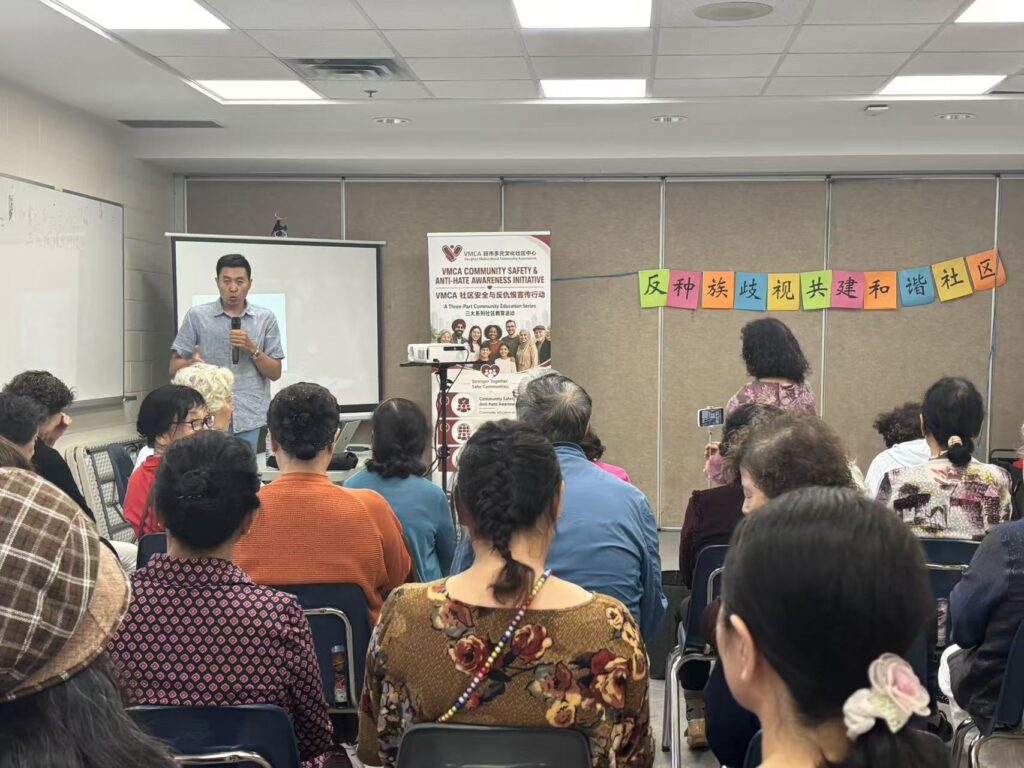
Tian encouraged participants to distinguish among discrimination, interpersonal disputes, harassment and hate-motivated incidents, as each may require a different response. Residents should consider the circumstances carefully, remain calm and place personal safety first.
If an incident involves an immediate threat to personal safety, individuals should leave the area when possible and call 911. If there is no immediate danger, residents may record the date, time, location, people involved and a factual description of what occurred.
Participants were advised to preserve any relevant emails, text messages, online posts, photographs, videos, receipts or other materials. If witnesses are present, their contact information may also be helpful, provided they agree to share it.
Clear and objective records can assist police, community agencies, employers, schools, housing providers or other responsible organizations in understanding what happened. Documentation may also be important if an individual decides to make a formal complaint or seek legal assistance.
Understanding Legal Rights and Complaint Channels
Tian also provided an overview of the principles of equality and human rights protection in Canada. He discussed the types of legal and institutional channels that may be available when discrimination occurs in employment, housing, education, services or public settings.
He explained that the appropriate reporting process depends on where an incident takes place and what occurred. A workplace incident may need to be raised with an employer or another relevant body, while a matter involving a school, rental housing, commercial service or public institution may follow a different process.
When reporting an incident, residents should describe when and where it occurred, who was involved, what was said or done, and why they believe the treatment may have been connected to race, colour, ethnicity, place of origin, religion, language or another protected characteristic.
Tian reminded participants that every case involves different facts and procedures. Anyone dealing with a complex situation should consider contacting the appropriate organization or a qualified legal professional for advice specific to the circumstances.
The session emphasized that standing up for one’s rights does not necessarily mean escalating a conflict. Depending on the nature of the incident, possible responses may include direct communication, an internal complaint, third-party assistance, a formal report or legal consultation. The objective is to stop inappropriate conduct, protect individual rights and reduce the likelihood of similar incidents occurring again.
Seniors Share Their Own Experiences
Following the presentation, Tian used questions and guided discussion to invite senior members to share their own experiences. Several participants spoke about prejudice, cultural misunderstanding or discriminatory treatment they had encountered during their immigrant journeys and daily lives in Canada.
The interactive portion changed the session from a one-way presentation into a two-way community conversation. As the discussion continued, more participants came forward with personal stories and asked questions about recognizing discrimination, preserving evidence and identifying the appropriate organization to contact.
Some seniors said they had previously chosen not to pursue incidents because they faced language difficulties, did not understand the Canadian system or were uncertain whether their concerns would be taken seriously. The workshop provided an opportunity for them to learn more about basic legal protections and possible reporting channels.
VMCA noted that sharing personal experiences can itself be an important form of community support. Hearing from others helped participants recognize that they are not alone when confronting prejudice or discrimination.
The exchange also helped reduce feelings of isolation and build a stronger sense of connection among participants. The message that “we do not have to face these situations alone” contributed to a greater sense of belonging, mutual support and community safety.
The Role of Bystanders and Community Members
The session also examined how witnesses can respond to suspected discrimination or hate-motivated conduct. Tian advised bystanders to assess safety first and avoid actions that could intensify a confrontation.
When it is safe to do so, witnesses may check on the affected person, help contact family members or relevant services, document basic information or provide a witness statement afterward. If the situation presents a danger, seeking help from police or other trained professionals should take priority.
For discriminatory, harassing or hateful content posted online, residents may preserve information such as screenshots, account details and publication times before using the platform’s reporting tools. Content involving direct threats or a possible risk to public safety may also need to be reported to police or another appropriate authority.
Helping Seniors Overcome Language and Information Barriers
VMCA said newcomers and seniors may face multiple barriers when dealing with discrimination, including limited English proficiency, uncertainty about government and legal systems, and a lack of information about available community services.
In some cases, people do not remain silent because they are unwilling to protect their rights, but because they do not know which organization to approach or what assistance may be available.
Community organizations can help close this information gap by providing in-person education, multilingual resources and referrals to appropriate services. Workshops can also present complex public safety and legal information in language that is easier for residents to understand and use.
According to VMCA, community safety is not limited to preventing crime. It also involves reducing discrimination, hate and social exclusion, while ensuring that residents from different backgrounds can participate equally in community life.
Through its Community Outreach & Multicultural Safety Awareness series, VMCA aims to improve public understanding of multiculturalism, anti-hate awareness and community safety. The organization also hopes to help newcomers and seniors develop greater confidence in responding to discrimination and seeking appropriate assistance.
The session concluded with a call for residents to respect cultural differences and avoid making negative assumptions based on race, skin colour, language, religion or cultural background. When discrimination occurs, residents were encouraged to remain calm, preserve relevant information and use the appropriate reporting channels.
Organizers said that building a harmonious community does not require cultural differences to disappear. Instead, it requires residents to recognize those differences while upholding equality, inclusion and mutual support, so that people of every background can feel respected, safe and connected to their community.